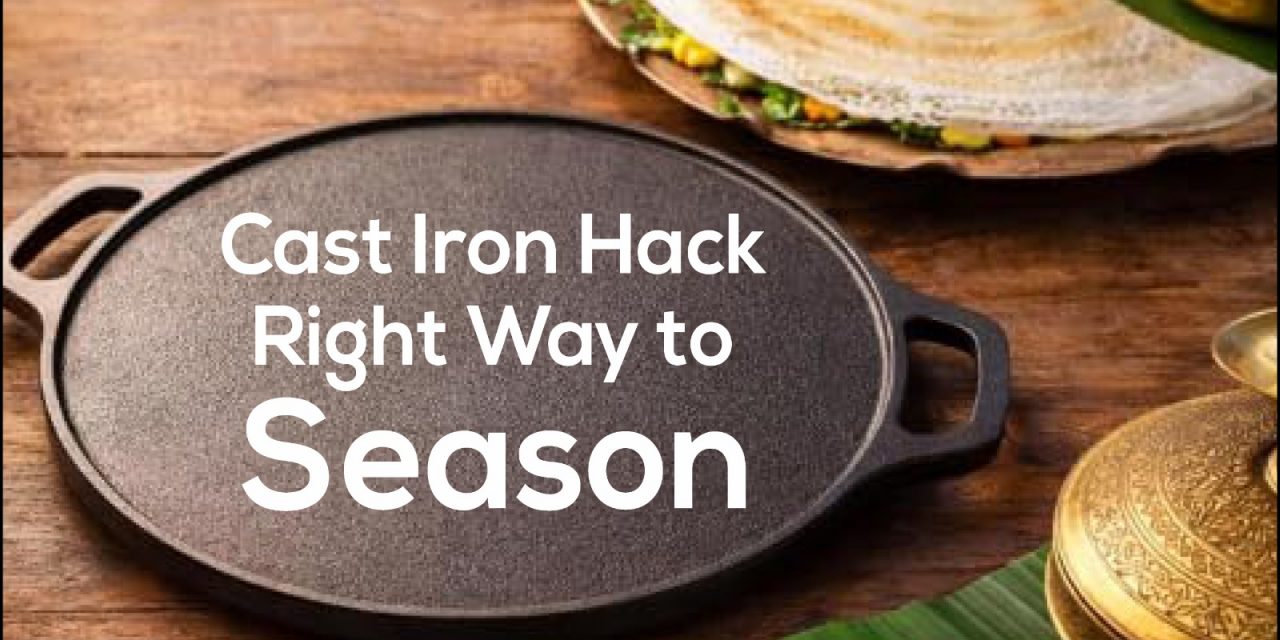
The Secret Behind Every Crispy Dosa Starts with the Right Tava
Imagine preparing fresh dosa batter, pouring it onto a hot tava, only to find the dosa sticking, tearing, or refusing to turn golden brown.
Frustrating, isn’t it?
In most cases, the problem isn’t your batter—it’s an improperly seasoned cast iron tava.
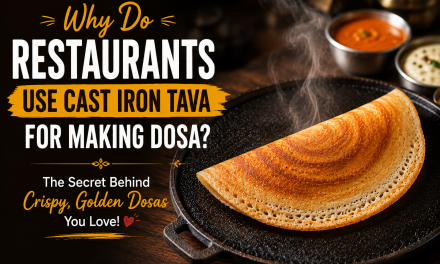
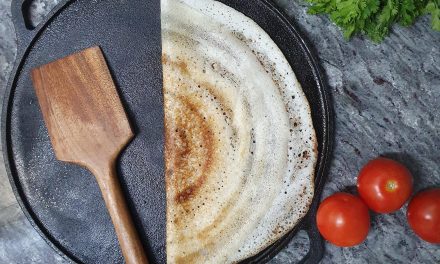
A well-seasoned cast iron tava develops a natural cooking surface that improves with every use. It not only prevents sticking but also helps create the crispy, golden dosas that South Indian kitchens have been known for for generations.
Whether you’ve just bought a new cast iron tava or are trying to restore an old family favourite, this guide will walk you through four trusted seasoning methods that have stood the test of time.
Why Is Seasoning So Important?
Many people believe cast iron is naturally non-stick.
The truth is that cast iron becomes naturally non-stick only after proper seasoning.
Seasoning creates a protective layer by bonding a thin film of oil to the iron through heat. As this layer builds over time, the tava becomes smoother, darker, and easier to cook on.
A properly seasoned cast iron tava:
✅ Prevents food from sticking
✅ Protects against rust
✅ Distributes heat evenly
✅ Improves with every use
✅ Lasts for generations
Think of seasoning as giving your cast iron tava a protective shield that gets stronger every time you cook.
Method 1: The Traditional Oil Seasoning Method (The Gold Standard)
Why This Method Works
This is the most widely recommended method and is perfect for both brand-new and old cast iron tavas. Repeatedly heating a thin layer of oil creates a durable natural coating that improves with every use.
What You’ll Need
- Groundnut Oil
- Sesame Oil
- Rice Bran Oil
- Soft cloth or paper towel
Step-by-Step Guide
- Wash the tava thoroughly to remove any factory residue.
- Dry it completely.
- Heat it over a medium flame for 5–10 minutes.
- Apply a very thin layer of oil across the entire surface.
- Continue heating until the oil begins to smoke lightly.
- Turn off the heat and allow the tava to cool naturally.
- Repeat this process three to four times.
Why We Recommend This Method
✔ Easy for beginners
✔ Creates a strong seasoning layer
✔ Gives consistent results
✔ Ideal for regular home cooking
Method 2: The Traditional Onion Seasoning Trick
Why Do South Indian Cooks Use an Onion?
If you’ve ever watched an experienced dosa maker, you’ve probably seen them rubbing half an onion over the hot tava before spreading the batter.
This simple trick helps distribute a thin layer of oil evenly, removes tiny food particles, and prepares the surface for smooth batter spreading.
Step-by-Step Guide
- Heat the tava on a medium flame.
- Cut a medium onion into half.
- Dip the cut side into a little cooking oil.
- Rub the onion over the entire cooking surface in circular motions.
- Continue for 2–3 minutes.
- Wipe off any excess oil with a clean cloth.
- Spread the dosa batter immediately.
Best For
✔ Everyday dosa making
✔ Preventing batter from sticking
✔ Maintaining an already-seasoned tava
Method 3: Potato & Rock Salt – The Deep Cleaning Method
Why This Method Works
New cast iron tavas may have manufacturing residue or a rough cooking surface. The combination of potato and coarse rock salt gently cleans the surface while preparing it for seasoning.
What You’ll Need
- One potato (cut in half)
- 2 tablespoons of coarse rock salt
- 1 teaspoon cooking oil
Step-by-Step Guide
- Heat the tava gently.
- Sprinkle the rock salt evenly over the surface.
- Rub the cut potato firmly across the tava in circular motions.
- Continue rubbing for 5–7 minutes.
- Remove the salt and wipe the tava clean.
- Apply a thin coat of oil.
- Heat until the oil begins to smoke lightly.
Best For
✔ Brand-new cast iron tavas
✔ Removing factory coatings
✔ Preparing the tava for its first seasoning
Method 4: Rice Starch (Kanji) – Grandma’s Time-Tested Secret
Why Rice Starch?
Long before modern cookware care products existed, many South Indian households seasoned their cast iron cookware using rice starch (kanji). The starch helps clean the surface naturally while preparing it for oil seasoning.
Step-by-Step Guide
- Collect the starchy water left after cooking rice.
- Pour enough rice starch onto the tava to coat the surface.
- Heat gently until the starch begins to dry.
- Allow it to cool completely.
- Wash lightly with water and dry thoroughly.
- Apply a thin coat of oil.
- Heat until lightly smoking and repeat if necessary.
Best For
✔ Traditional seasoning
✔ First-time preparation
✔ Restoring older cast iron cookware
How Do You Know It’s Time to Re-Season Your Tava?
Your cast iron tava will let you know when it needs attention.
Look out for these signs:
🔸 Dosas begin sticking to the surface.
🔸 Rust spots start appearing.
🔸 The cooking surface looks grey instead of deep black.
🔸 Food browns unevenly.
🔸 Oil gets absorbed immediately after application.
If you notice any of these signs, it’s time to season your tava again.
7 Common Mistakes That Can Ruin Your Cast Iron Tava
1. Applying Too Much Oil
A thick layer of oil creates a sticky surface instead of a smooth seasoning.
2. Leaving the Tava Wet
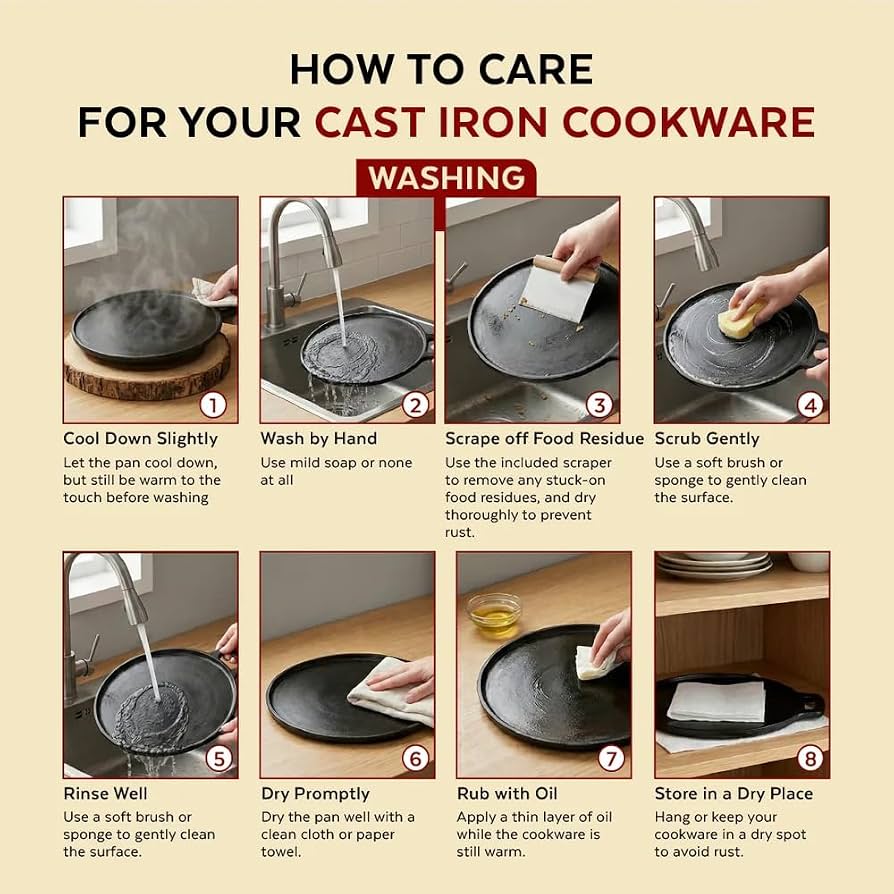
Moisture causes rust. Always dry your tava immediately after washing.
3. Using High Heat During Initial Seasoning
Excessive heat can burn the oil before it bonds properly with the iron.
4. Cooking Acidic Foods Too Soon
Tomatoes, tamarind, and vinegar can weaken a newly formed seasoning layer.
5. Scrubbing with Harsh Steel Wool Frequently
Over-scrubbing removes the protective seasoning.
6. Storing Without Oiling
A light coating of oil helps protect the surface during storage.
7. Not Using the Tava Regularly
The best way to improve seasoning is simply to cook on it often.
Chef’s Tips for Restaurant-Style Crispy Dosas
✔ Preheat the tava properly before pouring batter.
✔ Sprinkle a few drops of water to check the temperature—they should sizzle and evaporate quickly.
✔ Wipe the surface lightly with an onion dipped in oil before each dosa.
✔ Spread the batter gently without pressing too hard.
✔ Allow the dosa to release naturally before attempting to flip it.
Final Thoughts
A cast iron tava is much more than a cooking utensil—it’s a tradition that improves with time. Every layer of seasoning adds character, every dosa strengthens the cooking surface, and every meal brings you closer to authentic South Indian cooking.
Whether you choose the classic oil method, the onion technique, the potato and rock salt method, or the traditional rice starch approach, consistency is the secret. With proper care, your cast iron tava can reward you with perfectly crisp, golden dosas for decades.
At Udupi Kitchen, we believe authentic South Indian cooking begins with two essentials: quality, naturally fermented batter and a well-seasoned cast iron tava. Together, they create the flavour, aroma, and texture that generations have cherished.
Authentic batter deserves authentic cooking.